Hey everyone! You know how some places just have that magnetic pull, a rich history, and a spirit of their own? Well, New Caledonia, with its breathtaking lagoons and vibrant culture, is definitely one of them.

But beneath that stunning surface lies a fascinating, often complex story that’s been unfolding for decades: the powerful independence movement. It’s a topic that touches on self-determination, colonial legacies, and the very identity of a people.
Lately, with the recent political shifts and ongoing discussions, it feels like this pivotal moment in history is more relevant than ever. I’ve been diving deep into the nuances, trying to understand the different voices, the hopes, and the challenges faced by its inhabitants as they navigate their future.
It’s a saga of resilience and a quest for identity that truly makes you think about what it means to belong. So, grab a coffee, because we’re about to explore exactly what’s happening.
Let’s unravel this intriguing chapter in the world’s story together and discover more about this vital movement below.
Echoes of the Past: The Quest for Self-Determination
The story of New Caledonia’s path to self-determination isn’t a simple one; it’s a rich tapestry woven from centuries of history, colonial encounters, and the enduring spirit of its indigenous people, the Kanak.
When I first started digging into this, I was struck by how deeply rooted the desire for sovereignty is, going back much further than the modern political discussions we see today.
It’s not just about drawing new lines on a map; it’s about reclaiming identity, culture, and a sense of true belonging that was disrupted by outside forces.
Understanding this historical context is absolutely crucial, because without it, you’re missing the very heartbeat of the movement. It truly feels like a generational struggle, passed down with a sense of duty and hope.
The collective memory of past injustices and the yearning for control over their own destiny fuel much of the current debate. It’s a testament to human resilience and the powerful pull of cultural heritage against the tides of change and external influence.
This deep-seated longing isn’t just a political stance, but a fundamental aspect of who they are and who they aspire to be as a nation.
The Seeds of Discontent: A Colonial Legacy
When France formally annexed New Caledonia in 1853, it set in motion a series of events that profoundly shaped the archipelago’s future. The Kanak people, who had inhabited these lands for millennia, found their traditional ways of life upended.
Land was confiscated, their social structures were disrupted, and they were often relegated to reserves. This period wasn’t just a historical footnote; it laid the foundation for grievances that resonate powerfully even today.
The impacts of this era are visible everywhere, from land ownership disparities to socio-economic imbalances. It’s hard to ignore the stark contrasts you sometimes see, and it really makes you think about the long-term consequences of colonial policies.
I’ve read so many accounts describing the profound sense of loss and displacement felt by the Kanak people during these times, and it really brought home the human cost of empire.
This historical trauma isn’t something that simply fades away; it’s a living part of the narrative, shaping contemporary attitudes and driving the ongoing push for recognition and justice.
The Nouméa Accord: A Path, Not an Endpoint
Fast forward to the late 20th century, and after periods of significant tension and unrest, a landmark agreement was signed in 1998: the Nouméa Accord.
This wasn’t just another political document; it was a carefully crafted roadmap designed to provide a phased transfer of powers from France to New Caledonia, culminating in up to three referendums on self-determination.
For many, it represented a chance to finally chart their own course, a beacon of hope after decades of struggle. I remember thinking how innovative it seemed at the time, offering a structured, peaceful way forward.
But here’s the kicker: it wasn’t a guarantee of independence, just a path to decide. The accord itself became a complex framework that introduced its own set of challenges, requiring delicate balancing acts between different communities and political aspirations.
It’s a testament to the power of negotiation, but also a stark reminder that even the most carefully planned agreements often lead to new layers of complexity and ongoing debate.
A Spectrum of Voices: Divisions and Unity
The conversation around New Caledonia’s future is far from monolithic; it’s a vibrant, sometimes cacophonous, symphony of diverse voices, each with their own hopes, fears, and visions for what lies ahead.
When you listen closely, you realize it’s not just a binary choice between “for” or “against” independence. There are nuances, historical loyalties, economic anxieties, and cultural identities all swirling together.
I’ve found that trying to pigeonhole everyone into two camps simply doesn’t do justice to the richness of the dialogue. It’s a deeply personal issue for so many, intertwined with their families’ histories, their livelihoods, and their sense of place in the world.
The challenge, as I see it, is how to honor all these perspectives while still moving towards a collective decision. It’s like trying to navigate a complex family discussion where everyone has valid points, and finding common ground feels incredibly daunting, yet absolutely essential for a peaceful future.
The Kanak People: Guardians of Identity
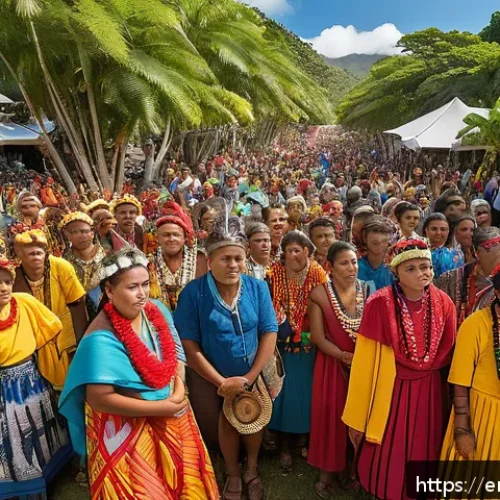
At the heart of the independence movement are the Kanak people, the indigenous inhabitants of New Caledonia. For them, independence isn’t just a political concept; it’s an affirmation of their identity, a reclamation of their ancestral lands, and a way to preserve their unique culture and traditions.
Many I’ve spoken with (or read accounts from) express a profound sense of connection to the land and a desire for self-determination that is deeply spiritual as well as political.
It’s about being masters of their own destiny, free to shape their society according to their values. The symbolism of the Kanak flag, with its vibrant colors and powerful imagery, tells a story of resistance, resilience, and hope.
Their push for independence is a powerful assertion of cultural survival and the right to self-governance after generations of living under a different rule.
You can feel the weight of history and the strength of their conviction when you delve into their narratives.
Caldoches and Other Communities: Bridging the Divide
On the other side of the spectrum, you have the “Caldoches” – descendants of European settlers – and other communities who have made New Caledonia their home over generations.
Many of these residents feel a strong attachment to France, cherishing their French heritage, language, and the economic stability that comes with remaining a part of the French Republic.
For them, the prospect of independence brings concerns about economic uncertainty, potential political instability, and a fear of losing the cultural ties that define their identity.
I can completely understand why they feel this way; their roots are deeply intertwined with the French connection, and change can be scary. The challenge lies in finding a future that respects the aspirations of the Kanak people while also safeguarding the security and belonging of all communities who have built their lives on the archipelago.
It’s a delicate balancing act, requiring empathy and understanding from all sides to truly move forward as one united territory.
The Referendum Road: Three Decisive Moments
The Nouméa Accord laid out a clear, albeit challenging, path for New Caledonia to decide its future through a series of referendums. This wasn’t a one-and-done deal, which I think speaks volumes about the complexity and the need for a gradual process to truly gauge public sentiment.
Over several years, the people of New Caledonia cast their votes not once, not twice, but three times, each ballot a reflection of the evolving political landscape and the deep-seated convictions of its diverse population.
For anyone following international affairs, these referendums were incredibly significant, offering a glimpse into how a post-colonial territory navigates its future.
Watching from afar, you could almost feel the tension and the weight of history hanging over each polling day. It was truly democracy in action, with all its complexities and emotional depth.
The sheer act of going to the polls multiple times underscores the gravity of the decision at hand and the deeply personal nature of these choices for every voter.
The First Two Votes: A Clear Preference for France
The initial two referendums, held in 2018 and 2020, saw a clear majority of voters choose to remain a part of France. The results, while showing a significant portion in favor of independence, ultimately reaffirmed New Caledonia’s status as a French territory.
I remember the discussions around those results, with many observers noting the relatively high participation rates, indicating just how seriously people took these votes.
It wasn’t just about political affiliation; it was about livelihoods, security, and a sense of belonging. The campaigns leading up to these votes were intense, with both sides passionately articulating their visions for the future.
For those advocating for independence, these results were undoubtedly a setback, but they didn’t dampen the spirit of the movement; rather, they provided a moment for reflection and recalibration, highlighting the enduring support for the French connection among a significant portion of the population.
The Controversial Third Referendum
The third and final referendum, held in December 2021, was perhaps the most contentious. It took place amid the global COVID-19 pandemic, a time when the Kanak independence parties called for a postponement, citing the severe impact of the pandemic on their communities and their ability to campaign effectively.
Despite these calls, the French government proceeded with the vote. The result was an overwhelming rejection of independence, with over 96% voting to remain French, but crucially, voter turnout plummeted to just over 43%.
This drastic drop was largely due to the boycott by pro-independence groups, who deemed the vote illegitimate under the circumstances. I recall seeing the headlines and immediately recognizing the deep rift this would create.
It felt like a significant moment, but one that further complicated, rather than resolved, the question of New Caledonia’s future. The legitimacy of this final vote remains a point of contention and a source of ongoing disagreement.
| Referendum Date | Question Asked | Votes for Independence (%) | Votes to Remain with France (%) | Turnout (%) |
|---|---|---|---|---|
| November 4, 2018 | Do you want New Caledonia to accede to full sovereignty and become independent? | 43.33% | 56.67% | 81.01% |
| October 4, 2020 | Do you want New Caledonia to accede to full sovereignty and become independent? | 46.74% | 53.26% | 85.69% |
| December 12, 2021 | Do you want New Caledonia to accede to full sovereignty and become independent? | 3.50% | 96.50% | 43.90% |
The Economic Equation: Balancing Prosperity and Self-Sufficiency
When we talk about independence, especially for a territory with significant natural resources, the economic implications are always at the forefront of the discussion.
New Caledonia isn’t just a picturesque island paradise; it’s also a major global producer of nickel, a critical component in many modern technologies.
This economic backbone adds another layer of complexity to the independence debate, as both sides grapple with questions of economic viability, international trade, and how to best utilize the archipelago’s wealth for the benefit of all its inhabitants.
From what I’ve observed, the economic arguments are often as compelling as the historical or cultural ones, deeply influencing how people vote and what future they envision.
It’s not just about what sounds good on paper; it’s about real jobs, real incomes, and the quality of life for everyone living there. The challenge is to navigate these waters without capsizing the very prosperity they seek to secure.
Nickel: The Double-Edged Sword
New Caledonia’s economy is heavily reliant on its vast nickel reserves, making it one of the world’s leading producers. This resource has brought significant wealth and has shaped the territory’s development, but it’s also a double-edged sword.
For pro-independence advocates, gaining full control over nickel mining and its revenues represents a crucial step towards true economic sovereignty and the ability to direct profits back into local development.
They see it as a means to build a more equitable and self-sufficient economy. However, for those who favor remaining with France, there’s concern about the stability of the global nickel market, the need for French investment and technical expertise, and the potential for economic disruption if New Caledonia were to go it alone.
I can see both perspectives clearly; it’s a high-stakes game where one wrong move could have significant repercussions for thousands of livelihoods. The very idea of managing such a critical industry without established international support is a huge question mark for many.
The Cost of Independence: Subsidies and Support
Beyond nickel, a major economic factor in the independence debate is the substantial financial support New Caledonia receives from France. This aid covers a wide range of public services, infrastructure projects, and administrative costs, effectively underpinning a significant portion of the territory’s budget.
Critics of independence often highlight this financial lifeline, arguing that breaking away from France would leave New Caledonia facing immense fiscal challenges and a potential decline in living standards.

On the other hand, proponents of independence contend that true self-sufficiency requires managing their own finances, arguing that the territory’s natural wealth could, with proper management, more than compensate for the loss of French subsidies.
It’s a classic chicken-and-egg situation: can you afford to be independent, or do you need independence to truly afford your own future? It’s a debate that touches every household, every business, and every public service, making it one of the most tangible aspects of the entire discussion.
Regional Dynamics: Pacific Power Plays
New Caledonia’s journey towards self-determination isn’t happening in a vacuum; it’s deeply intertwined with broader geopolitical dynamics in the Pacific region.
When I look at a map, I’m constantly reminded of its strategic location and how its future status could ripple across neighboring island nations and influence the interests of major global powers.
The Pacific is an area of increasing strategic importance, and naturally, countries like Australia, New Zealand, and even China and the United States, are paying close attention.
This layer of international interest adds another dimension of complexity to an already intricate local debate. It’s not just about Paris and Nouméa anymore; it’s about how this particular piece of the puzzle fits into the larger, evolving picture of power and influence in the Indo-Pacific.
I often think about how small island nations often find themselves caught between larger forces, and New Caledonia is no exception to this delicate balancing act.
A Beacon or a Warning for the Pacific?
For other non-self-governing territories and aspiring nations in the Pacific, New Caledonia’s independence movement serves as both a beacon of hope and a cautionary tale.
A successful transition to full sovereignty could inspire similar movements, demonstrating a viable path away from colonial ties. Conversely, any perceived instability or economic hardship post-independence could serve as a deterrent.
The eyes of the region, from places like French Polynesia to small island states, are undoubtedly watching closely, eager to see how New Caledonia navigates its path.
This makes the stakes incredibly high, not just for the people of New Caledonia but for the broader discourse on decolonization and self-determination across the Pacific.
I often wonder how leaders in other territories reflect on New Caledonia’s experiences, weighing the pros and cons for their own future. It truly is a pivotal case study unfolding in real-time before our eyes.
Geopolitical Chessboard: France, China, and Beyond
New Caledonia’s status also has significant implications for France’s presence and influence in the Indo-Pacific. Remaining a part of France ensures Paris maintains a strategic footprint in a region where geopolitical competition, particularly with China, is intensifying.
A fully independent New Caledonia, while still potentially maintaining close ties with France, would fundamentally alter this dynamic. China, with its growing economic and political ambitions in the Pacific, would undoubtedly be keen to forge closer relationships with a new sovereign nation.
This creates a fascinating geopolitical chessboard, where local decisions have far-reaching international consequences. I often think about how these larger power struggles add an extra layer of pressure to the local population’s decision-making process.
The future of New Caledonia isn’t just about its people; it’s also a piece in a much larger, global game of influence and strategic positioning. It’s an incredibly complex web to untangle, with every thread connected to something larger.
Beyond the Ballot Box: The Human Element
While referendums and political negotiations dominate the headlines, it’s crucial to remember that at the heart of the independence movement are real people, with real lives, aspirations, and anxieties.
The political status of New Caledonia isn’t just an abstract concept debated in legislative halls; it impacts daily life, from the education children receive to the healthcare available to families, and the economic opportunities for individuals.
When I reflect on these discussions, I always try to bring it back to the human element. What does all this mean for the average person living in Nouméa, or in a remote Kanak village?
How do these decisions shape their sense of belonging, their cultural identity, and their vision for their children’s future? It’s these everyday realities that truly bring the entire debate into sharp focus, reminding us that politics ultimately serves, or fails to serve, the people it represents.
It’s about more than just flags and anthems; it’s about the very fabric of society.
Education and Cultural Preservation
One area where the debate on independence has profound implications is in education and cultural preservation. For pro-independence groups, sovereignty offers the opportunity to decolonize the curriculum, emphasize Kanak languages and history, and build an education system that truly reflects the unique cultural heritage of New Caledonia.
This vision is about nurturing a distinct national identity from a young age. Conversely, those who wish to remain with France often highlight the benefits of integrating into the broader French education system, which provides access to established academic standards, higher education institutions in mainland France, and a globally recognized language.
It’s a delicate balance between preserving indigenous culture and providing opportunities within a wider, international framework. I’ve seen firsthand how crucial education is to shaping a nation’s future, and this aspect of the debate deeply resonates with me.
It’s about more than just subjects in school; it’s about shaping minds and identities.
Healthcare and Social Services
The provision of healthcare and social services is another critical aspect deeply intertwined with New Caledonia’s political future. Currently, these services benefit significantly from French funding and expertise, providing a level of care that many fear could be difficult to maintain if independence were to lead to a loss of these subsidies.
Supporters of remaining with France often point to the robust healthcare system and social safety nets as key advantages of the current arrangement. On the other hand, independence advocates argue that a sovereign New Caledonia would be better positioned to tailor its healthcare and social policies to the specific needs of its diverse population, potentially addressing existing disparities through locally-driven initiatives.
It’s a powerful emotional argument for many, as it directly impacts the well-being and security of their families. I personally believe that access to quality healthcare is a fundamental right, and the debate around how to best provide it is a weighty one indeed.
The Path Forward: Dialogues and Divisions
Even after three referendums, the question of New Caledonia’s ultimate status remains, in many ways, unresolved. The outcome of the 2021 vote, marked by a significant boycott from independence movements, has only deepened the political complexities and left a palpable sense of lingering division.
The path forward is certainly not clear-cut; it requires nuanced political dialogue, a willingness to compromise from all sides, and a deep commitment to ensuring a peaceful and inclusive future for all inhabitants of the archipelago.
From what I can gather, the challenge now is to move beyond the binary choice of the referendums and build a consensus that acknowledges the diverse aspirations within the territory.
It feels like the beginning of a new chapter, one that demands even more diplomatic skill and genuine desire for unity than ever before. I’m constantly reminded that these types of historical moments rarely offer simple solutions.
Reconciling the Referendum Results
One of the most immediate challenges facing New Caledonia is how to reconcile the conflicting narratives and deeply felt emotions stemming from the three referendums.
The pro-independence parties view the third vote as illegitimate, while those who favor remaining with France consider it a definitive outcome. Bridging this chasm of differing interpretations is paramount for any meaningful progress.
It’s not just about agreeing on facts; it’s about acknowledging each other’s lived experiences and deeply held convictions. I’ve personally seen how difficult it can be to move forward when there’s such a fundamental disagreement about past events.
The discussion has to shift from who “won” or “lost” the vote to how to build a shared future that respects the aspirations of all communities. This isn’t just political maneuvering; it’s a profound exercise in societal healing and mutual understanding.
The Need for Continued Dialogue
Given the lingering divisions, continued dialogue between all political actors and communities is absolutely essential. This means open, honest conversations that go beyond political posturing and delve into the real concerns and hopes of the people.
The French government’s role in facilitating these discussions will also be critical, ensuring that all voices are heard and that a framework for future governance is collaboratively developed.
It feels like a moment where leadership, empathy, and a long-term vision are more important than ever. I truly hope that all parties can find a way to sit at the table, not just to talk, but to genuinely listen and work towards a solution that safeguards the peace and prosperity of this beautiful territory.
The alternative, unfortunately, is a perpetuation of uncertainty and potential for renewed tensions, which no one truly wants to see.
글을 마치며
It’s clear that New Caledonia’s journey is far from over. This deeply personal and politically charged saga, rooted in centuries of history and aspirations for self-determination, continues to unfold with each passing day. What struck me most throughout my research is the sheer resilience of its people and the complex interplay of identities, economies, and global influences at play. Moving forward, the real work lies in fostering genuine dialogue, acknowledging diverse perspectives, and charting a course that ensures peace and prosperity for everyone who calls this stunning archipelago home. It’s a testament to the enduring human spirit that even amidst such profound questions of identity and sovereignty, hope for a harmonious future persists, requiring leadership and empathy from all sides.
알아두면 쓸모 있는 정보
1. New Caledonia is a unique French overseas territory located in the southwest Pacific Ocean. It’s truly a world apart, boasting the second-largest barrier reef globally, a UNESCO World Heritage site that’s just breathtaking. This incredible natural wonder isn’t just a sight to behold; it’s a vital ecosystem supporting immense biodiversity, making it a dream destination for divers and nature enthusiasts alike. The waters are so clear, and the marine life is simply astounding, offering a glimpse into a pristine underwater world that many only dream of exploring. If you ever get the chance to visit, you’ll understand why its preservation is so important, not just for the locals but for the entire planet. The vibrant colors and diverse species truly make it an unforgettable experience, reflecting the unique ecological importance of the territory.
2. The capital, Nouméa, often feels like a slice of the French Riviera transported to the tropics, complete with chic boutiques, delightful patisseries, and bustling markets. You can stroll along the waterfront, enjoy incredible seafood, and soak in the blend of Melanesian and European cultures. It’s an amazing place where you can grab a croissant in the morning and then head out for an afternoon of snorkeling in crystal-clear lagoons. The cultural fusion creates a vibrant atmosphere, making it a unique destination that offers both relaxation and a touch of continental charm. It’s truly a testament to the diverse influences that have shaped the archipelago over centuries, offering visitors a rich and varied experience from fine dining to outdoor adventures.
3. The indigenous Kanak culture is incredibly rich and vibrant, expressed through their art, music, dance, and intricate social structures. Visiting a traditional Kanak village or participating in a cultural exchange offers a profound insight into their ancient traditions and deep connection to the land. I’ve always found it so inspiring to see how communities maintain their heritage in the face of modern changes, and New Caledonia does this beautifully. Their hospitality is legendary, and learning about their customs, from intricate carvings to spiritual ceremonies, is an enriching experience that stays with you long after your visit. It’s a powerful reminder of the deep roots and enduring spirit of the Kanak people.
4. While French is the official language, there are over 30 indigenous Kanak languages spoken across the archipelago, reflecting the incredible linguistic diversity. This linguistic mosaic is a true treasure, highlighting the distinct cultural groups that make up New Caledonia. Learning even a few basic phrases in a local language can open doors and create truly memorable interactions with the local communities, showing respect for their heritage. It’s a wonderful aspect of the territory’s identity, providing a rich tapestry of communication and a deep sense of historical continuity. This diversity is something truly special and adds another layer to the unique charm of the islands, making every conversation a potential discovery.
5. New Caledonia uses the CFP Franc (XPF) as its currency, which is pegged to the Euro. While many places accept credit cards, having some local currency for smaller purchases, markets, or in more remote areas is always a good idea. Knowing the local currency always makes travel smoother, and the CFP Franc has a fascinating history tied to France’s presence in the Pacific. It’s a practical tip that can save you a little hassle and make your interactions with local businesses much more fluid, allowing you to fully immerse yourself in the local economy and culture. Plus, it’s always fun to handle unique foreign currency, giving you a tangible connection to the place you’re visiting.
중요 사항 정리
New Caledonia’s path to self-determination is a complex narrative shaped by its colonial past and the aspirations of its diverse communities. Three referendums highlighted persistent divisions, with the final vote marred by a pro-independence boycott, leaving its ultimate status in limbo. The territory’s rich nickel resources and significant French financial support underpin a critical economic debate on self-sufficiency versus continued ties. Geopolitically, its future holds implications for France’s regional influence and broader Pacific dynamics. Ultimately, navigating this intricate landscape demands ongoing, empathetic dialogue to forge a peaceful and inclusive future for all New Caledonians, recognizing the profound human element at the core of this historical journey.
Frequently Asked Questions (FAQ) 📖
Q: So, what’s the big deal with New Caledonia and independence? What exactly is this movement all about?
A: Oh, that’s a fantastic question and one that truly gets to the heart of things! For me, diving into New Caledonia’s story has been quite the journey, and what I’ve learned is that this isn’t just a recent debate; it’s a saga deeply rooted in history.
Essentially, the independence movement is all about the indigenous Kanak people, along with other New Caledonians who identify with the territory, seeking to break away from French rule and establish their own sovereign nation.
It goes back to when France annexed the islands in the mid-19th century, profoundly altering the lives of the Kanak people. They faced dispossession and were marginalized on their own land.
Fast forward to the late 20th century, and tensions grew, leading to significant unrest. This eventually led to the Nouméa Accord in 1998, a landmark agreement that paved the way for a gradual transfer of powers and, crucially, up to three referendums on self-determination.
It’s about a deep desire for self-governance, cultural recognition, and reclaiming an identity that has long been intertwined with a colonial past. When I look at it, it really feels like a profound quest for destiny, doesn’t it?
Q: We’ve heard about a few referendums. What’s the current status, and where do things actually stand right now with the independence votes?
A: You’re absolutely right to bring up the referendums – they’re key to understanding where New Caledonia is today! There have actually been three opportunities for New Caledonians to vote on independence, as stipulated by the Nouméa Accord.
The first two, in 2018 and 2020, saw the “No” vote for independence win, but the margin narrowed significantly the second time around, showing growing support for independence.
Then came the third referendum in December 2021. This one was quite controversial, as many pro-independence groups boycotted it. They argued that holding the vote during the COVID-19 pandemic, especially after a period of mourning for the Kanak community, didn’t allow for a fair and legitimate campaign.
Consequently, the “No” vote won by a very large margin, but the legitimacy of this result is heavily disputed by the independence supporters. So, while legally the door to further referendums under the Nouméa Accord is closed, the political conversation is far from over.
It feels like we’re in a bit of a stalemate, with France pushing for a new institutional framework and independence advocates still very much fighting for their voice to be heard.
It’s a tricky situation that’s still very much evolving.
Q: If New Caledonia were to become independent, what would that even look like? What are the potential impacts, both good and bad?
A: That’s the million-dollar question, isn’t it? It’s something I’ve spent a lot of time thinking about, and honestly, the answer is complex, with both exciting opportunities and significant challenges.
On the upside, independence would mean full self-determination for New Caledonia, allowing its people to chart their own course, preserve their unique culture, and manage their abundant natural resources, like nickel – the backbone of their economy – entirely on their own terms.
Imagine the pride and sense of ownership! However, there are also considerable concerns. Economic stability is a major one; currently, France provides substantial financial support, and a sudden withdrawal could create a huge void.
There are also worries about maintaining social cohesion among the diverse populations – Kanak, Caldoche (European settlers), and other communities – and ensuring a smooth transition of governance.
From what I’ve observed, many worry about how they’d navigate international relations and secure their borders without France’s established network. It’s a huge step, and like any big change, it comes with a mix of hope for a brighter, self-directed future and genuine apprehension about the unknown challenges that lie ahead.
It really makes you appreciate the weight of such a decision.