Hey there, fellow global trendsetters and sustainability enthusiasts! I’ve been keeping a really close eye on a situation unfolding in a stunning corner of the world, a place most of us probably associate with pristine beaches and vibrant culture: New Caledonia.
But beneath that beautiful surface lies a story of immense global significance, particularly for our future with electric vehicles and green energy. You see, this French territory in the South Pacific holds a staggering amount of the world’s nickel reserves, a metal absolutely crucial for the batteries powering our electric cars and countless other technologies.
It’s a resource that literally drives the modern world, yet the industry there is facing some incredibly tough times right now, a crisis compounded by rising costs, intense competition from other global players, and recent, deeply concerning political unrest that has even halted operations and led to massive layoffs.
The challenges are enormous, impacting not just local livelihoods but also the delicate balance of the global supply chain, which, as I’ve seen firsthand, can be more fragile than we realize.
This whole situation makes you wonder, doesn’t it? Can this critical industry find its footing again, especially with the world’s hunger for EV batteries only growing?
Let’s really dig deep into what’s happening and what it means for everyone.
It’s incredible, isn’t it, how global events in seemingly distant places can directly hit our pocketbooks and impact the everyday technologies we rely on?
I’ve been following the situation in New Caledonia for a while now, and it’s truly a complex web of economic, political, and environmental factors. This isn’t just about a far-off island; it’s about the very foundation of our green future, particularly when it comes to electric vehicles and renewable energy.
The nickel coming out of New Caledonia is absolutely critical for those high-tech batteries, and seeing their industry struggle so intensely hits home the fragility of global supply chains.
When you think about it, the ripples from there affect everything from the cost of your next EV to the availability of sustainable tech. Let’s really get into the nitty-gritty of what’s shaking up this vital nickel hub and what it means for all of us.
The Unraveling of a Critical Resource Hub
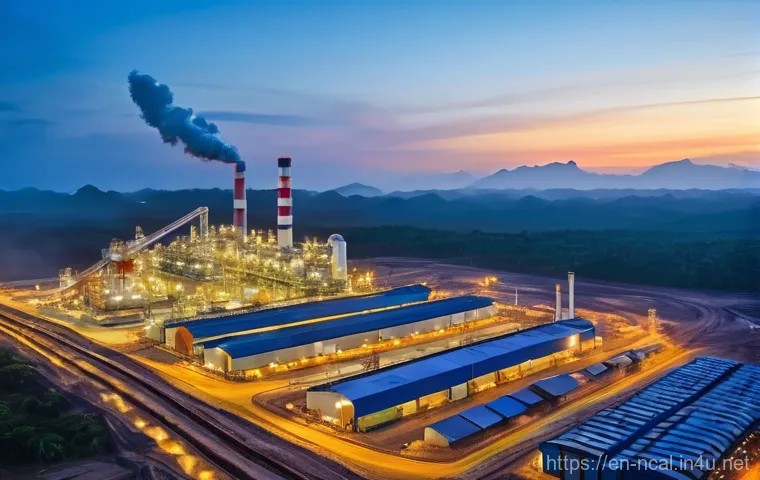
New Caledonia, a French territory nestled in the South Pacific, has historically been a titan in the global nickel market. I mean, we’re talking about a place that holds a significant chunk of the world’s nickel reserves—somewhere between 20% and 30% to be exact. This isn’t just any metal; it’s a linchpin for so many modern industries, from the stainless steel that makes up our kitchen appliances to the advanced batteries powering our electric vehicles. For years, the island’s economy has been intrinsically tied to this shiny, silvery metal, with nickel-related industries providing a livelihood for a substantial portion of its working population, estimated to be around 20-25% of the workforce. It’s hard to overstate how central this industry is to their very existence, accounting for as much as 94% of their exports and a hefty 20% of their GDP. Imagine a single industry holding that much sway over your country’s fate. It’s truly a double-edged sword: a blessing when prices are high, but an enormous vulnerability when the market turns. And boy, has it turned.
Nickel’s Deep Roots in New Caledonia’s Identity
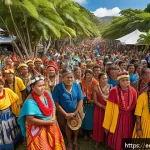
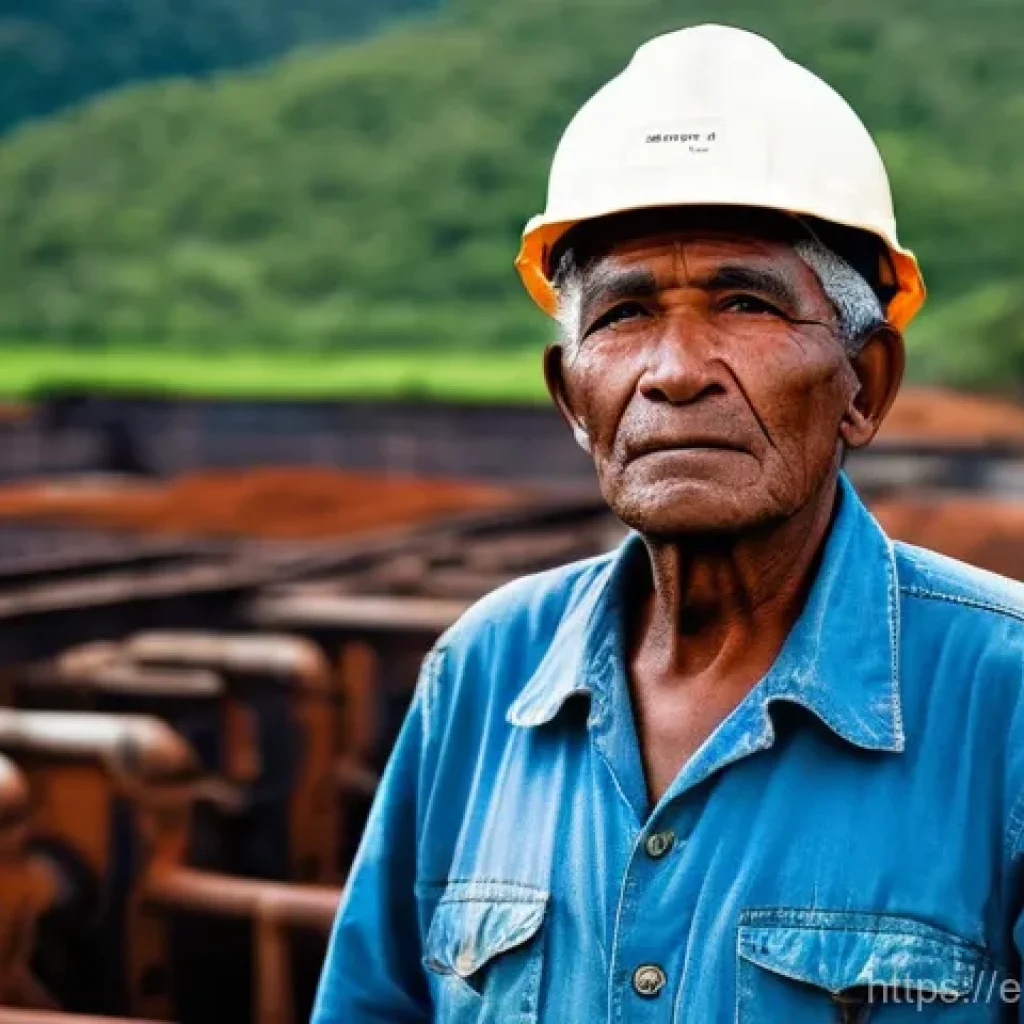
You know, for the indigenous Kanak population, the nickel plants aren’t just industrial sites; they’re symbols of economic empowerment and autonomy. Didier Bule, an engineer who spent 13 years maintaining machinery at the Koniambo plant, expressed how difficult it was to see the smelter’s furnaces switched off. He was there from the very beginning, watching the plant being built piece by piece, only to witness its gradual shutdown. This emotional connection to the industry underscores how much of their identity and future is intertwined with nickel. The struggles of these operations aren’t just financial; they hit at the heart of community pride and self-sufficiency, especially in regions like the North Province, which is governed by pro-independence groups. The idea of the “mining prerequisite” in past peace agreements shows how vital the fair distribution of nickel revenues has been to discussions of independence.
When Economic Tides Turn: The Crisis Takes Hold
The current crisis isn’t just a blip on the radar; it’s a deep, existential threat to New Caledonia’s nickel industry. We’ve seen major players like Glencore, which held a 49% stake in the Koniambo Nickel SAS (KNS) plant, withdraw funding and announce intentions to sell. This move alone led to the closure of the plant and approximately 1,200 layoffs in August, with up to another 2,000 subcontractor staff affected. The other major plants, Société Le Nickel (SLN) and Prony Resources, are also on shaky ground, needing government bailouts and loan agreements just to stay afloat. It’s a stark reminder of how quickly even established industries can be brought to their knees when the global economic landscape shifts. The human cost of these closures, with so many people left jobless, is truly heartbreaking.
Global Market Dynamics: The Indonesian Tidal Wave
Okay, so what’s really driving this nickel price slump that’s hitting New Caledonia so hard? If I had to pick one major factor, it would definitely be the absolute surge in low-cost nickel supply from Indonesia. It’s like a massive tidal wave that has swept over the global market, making it incredibly difficult for other producers to compete. Indonesia has just exploded onto the scene as the world’s largest nickel producer, cranking out an astonishing 1.8 million tons in 2023, representing roughly 53% of global output. This wasn’t by accident; it’s the result of a deliberate strategy, including an export ban on unprocessed nickel ore and massive investments, largely from Chinese companies, into domestic processing capabilities. They’ve built plants that process nickel into battery-grade material at a speed and cost that older, Western-backed operations simply can’t match.
The “Indonesia Effect” on Global Prices
I’ve been watching the London Metal Exchange (LME) nickel prices closely, and the impact is undeniable. Prices plummeted by about 45% last year, falling from around $28,000 per tonne in January 2023 to about $16,100 in January 2024. This drastic drop has pushed many nickel operations outside of Indonesia into unprofitability, with some analysts suggesting that at $18,000 a ton, 35% of production is unprofitable, and at $15,000, that number jumps significantly higher. It’s a classic supply-and-demand squeeze, but with a twist: the sheer volume and low cost of Indonesian production have fundamentally altered the market. It’s created a global surplus, with projections indicating it will persist through 2025 and even beyond. This isn’t just a minor adjustment; it’s a structural shift in the global nickel landscape.
China’s Strategic Role and Technological Edge
It’s fascinating to see how China has played such a pivotal role in Indonesia’s rise. Chinese resource groups haven’t just invested capital; they’ve brought advanced technology and efficiencies to nickel processing, particularly for battery-grade nickel, which requires higher purity. They’ve built plants in Indonesia in a fraction of the time and at a fraction of the cost compared to Western projects. This technological advantage, combined with strategic investments, has really solidified China’s grip on the nickel supply chain, not just in Indonesia but globally. It makes you think about how these geopolitical alignments shape resource availability and prices, and it’s a trend I believe we’ll see continue with other critical minerals.
Political Unrest and its Amplified Impact
As if the economic pressures weren’t enough, New Caledonia has also been grappling with significant political unrest, which has only piled on more challenges for its already struggling nickel industry. I mean, we’re talking about deadly riots that erupted in May, sparked by controversial plans to change voting rights for non-indigenous people. These events are deeply rooted in the territory’s complex history with France and ongoing debates about independence. The impact on the nickel industry was immediate and severe: mining operations were halted, ore reserves dwindled, and some plants had to drastically cut production. It was a perfect storm, exacerbating an already precarious situation.
Disruption to Operations and Supply Chains
From what I’ve seen, the unrest literally brought parts of the industry to a standstill. Mining operations at places like Société Le Nickel (SLN) were stopped, and access to crucial ore was cut off, which is a nightmare for high-temperature refining processes that need a constant supply. I heard a source at one of the plants describe it as “running on empty,” and that image really stuck with me. Beyond just mining, blockades and damage to sites during the chaos also disrupted fuel supplies, further paralyzing operations. This kind of disruption doesn’t just affect the local economy; it sends jitters through the entire global supply chain, reminding everyone just how interconnected we all are.
The Human and Economic Toll
The consequences of this unrest have been nothing short of catastrophic for New Caledonia. Estimates suggest that the damage from the riots, particularly in the capital Noumea, could amount to 1.2 billion euros (approximately U.S. $1.3 billion) in losses, with a staggering 35,000 people left jobless. Think about that for a second – 35,000 people in a territory of only 270,000. It’s a massive blow to families and communities. For workers like Didier Bule, who saw his plant close, job opportunities have drastically diminished, creating immense uncertainty for the future. This socio-political instability isn’t just a backdrop; it’s a direct driver of the economic crisis, making any recovery efforts incredibly challenging.
The EV Revolution’s Thirst for Nickel and Future Outlook
Despite the current surplus and the turmoil in places like New Caledonia, the long-term forecast for nickel demand, particularly for electric vehicle (EV) batteries, is undeniably strong. I mean, the world is charging ahead with decarbonization goals, and EVs are at the forefront of that transition. Nickel is a critical component in high-performance lithium-ion batteries, like the nickel manganese cobalt oxide (NMC) variants, because it boosts energy density, which means longer ranges for our EVs. As of 2023, EV sales hit around 14 million units globally, making up 18% of total automobile sales, and projections suggest that to meet climate goals, sales might need to reach 60 million units annually by 2030. That’s a massive increase, and it directly translates to a huge demand for nickel.
Meeting the Demand for High-Purity Nickel
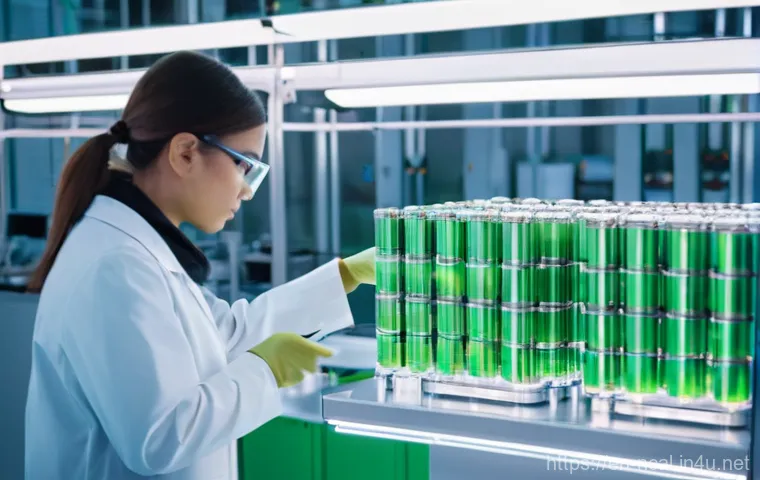
Here’s the thing: not all nickel is created equal. The EV battery industry needs high-purity, Class I nickel (greater than 99.8% purity) to produce nickel sulfate, which is the key ingredient for those advanced cathodes. While the overall nickel market might be in surplus due to low-grade production, the supply of this specific high-purity nickel remains a concern. Experts are forecasting that demand for nickel in EV batteries alone could rise from 8% of total demand in 2022 to 18% by 2030, potentially reaching between 0.53 million and 1.09 million tonnes. So, even with the current market conditions, there’s a real push for innovative solutions and sustainable mining practices to ensure a steady supply of battery-grade nickel. This is where the industry needs to focus its R&D and investment.
Challenges and Opportunities for New Caledonia
The situation in New Caledonia, while dire, isn’t necessarily a death knell for its nickel industry, but it absolutely demands a strategic rethink. The challenges are enormous: high operating costs, intense competition from low-cost Indonesian producers, and the need for significant upgrades to its power grid to ensure long-term profitability. However, New Caledonia still holds vast reserves, and there’s a growing global interest in diversifying supply chains away from over-reliance on any single region. If they can address their cost structure, attract new investors (Glencore is looking to sell its stake in KNS, for example), and perhaps focus more on producing battery-grade nickel, there could be a path forward. It’s a tough road, but the strategic importance of their resource remains. The French government is even trying to broker a “nickel pact” to implement stringent reforms.
Diversifying the Nickel Landscape: Beyond New Caledonia
It’s no secret that the current reliance on a few dominant players for critical minerals like nickel creates vulnerabilities in the global supply chain. I’ve observed firsthand how quickly things can change, and the New Caledonia situation is a stark reminder of that. The push for diversification isn’t just about geopolitics; it’s about ensuring stability and security for industries worldwide, especially those tied to the green energy transition. This means looking at alternative sources, investing in new mining and refining capacities, and exploring different battery chemistries to reduce dependence on specific materials.
The Rise of New Players and Technologies
While Indonesia currently dominates, other countries are keenly aware of the opportunities in the nickel market. The Philippines, for instance, is positioning itself as an alternative supplier, especially for Western companies looking to avoid Chinese-dominated supply chains. I’ve also seen a lot of buzz around technological innovations in battery chemistry, such as solid-state batteries, that promise higher efficiency and potentially reduced reliance on some of the more contentious critical metals. These advancements aren’t just theoretical; they’re actively being pursued by companies like Panasonic Energy, which is partnering with Australia’s CSIRO to advance nickel laterite processing technologies. It’s a dynamic and evolving landscape, and smart money is on those who are adaptable and innovative.
Balancing Sustainability and Supply Security
One critical aspect we can’t ignore is the environmental impact of nickel mining. New Caledonia itself has faced significant challenges, with mining leading to soil erosion and pollution of its pristine lagoons and coral reefs. As the demand for “green nickel” grows, producers are increasingly under pressure to adopt eco-friendly methods like hydrometallurgical processes and high-pressure acid leaching (HPAL) to minimize carbon emissions. Companies like Vale and BHP are integrating renewable energy into their operations, and Indonesia is attracting investments in green nickel projects. This push for sustainability isn’t just good for the planet; it’s becoming a crucial factor in attracting investment and securing market access, especially as consumers and governments demand more ethically sourced materials. It’s about creating a truly fair and sustainable supply chain from mine to market.
The Path Forward: Innovation, Collaboration, and Resilience
So, where do we go from here? The situation in New Caledonia, while complex, underscores a larger narrative about the future of critical minerals and the global energy transition. It’s not a simple fix, but a multi-faceted challenge that requires a holistic approach. I believe that true resilience in the supply chain will come from a combination of technological innovation, robust international collaboration, and a renewed focus on sustainable practices across the board. This isn’t just about finding more nickel; it’s about finding it smarter, cleaner, and in a way that benefits local communities and the planet.
Investing in the Next Generation of Nickel Production
For me, the key to navigating this volatile market lies in proactive investment in advanced mining and processing technologies. We need to support research and development into more efficient and environmentally sound extraction methods, moving away from practices that have historically caused significant environmental damage. This includes exploring new regions for nickel deposits, but with a firm commitment to responsible mining. Moreover, fostering domestic battery production and refining capacities in key regions, rather than concentrating them in just a few areas, will be crucial for enhancing supply chain security and stability. Companies like Tesla and CATL are already ramping up battery production, which naturally drives demand for high-purity nickel, and supporting these efforts with a diversified and secure supply is paramount.
The Importance of a Balanced Global Market
The current nickel market, with its persistent surplus and downward pressure on prices, is a tough landscape for many producers, especially those with higher operating costs. However, this doesn’t diminish nickel’s long-term strategic importance. The International Nickel Study Group (INSG) has been tracking this closely, and while a surplus is projected through 2025, the underlying demand growth, particularly from EVs, remains robust. The challenge is to find a balance where supply meets demand without creating wild price swings that cripple producers or make critical technologies unaffordable. This often requires governments to step in with strategic policies, like the “nickel pact” proposed by the French government for New Caledonia, to help stabilize the industry during tough times and ensure its long-term viability.
| Factor | Impact on New Caledonia Nickel Industry | Broader Global Implications |
|---|---|---|
| Indonesian Supply Surge | Massive price depression, unprofitability for higher-cost operations, significant layoffs (e.g., KNS closure). | Global nickel market oversupply, lower prices for end-users, increased market dominance by Indonesia/China. |
| Political Unrest (May 2024 Riots) | Halted mining operations, dwindled ore reserves, supply chain disruptions, significant economic losses (1.2 billion euros), mass unemployment (35,000 jobless). | Short-term nickel price spikes (e.g., LME prices above $20,000/tonne), increased risk premiums for shipping, highlighted fragility of supply chains. |
| High Production Costs | Struggles to compete with low-cost producers, reliance on government subsidies/loans for survival (e.g., SLN, Prony Resources). | Incentivizes investment in regions with lower operating costs, potentially marginalizing producers with less efficient operations. |
| Global EV Demand | Long-term potential for high-purity nickel, but immediate challenges in transitioning to battery-grade production. | Sustained long-term demand for high-purity Class I nickel, driving innovation in battery technology and mining. |
Wrapping Things Up
Whew! We’ve covered a lot of ground, haven’t we? It’s truly eye-opening to see how a seemingly localized crisis in New Caledonia can send such profound tremors through our global economy and, specifically, impact the very foundations of our green future. The nickel coming from this beautiful but troubled island is absolutely critical for the high-tech batteries that power our EVs and store renewable energy. When you peel back the layers, it becomes clear that the struggles there aren’t just about commodity prices; they’re deeply intertwined with geopolitical shifts, environmental responsibilities, and the livelihoods of real people. This whole situation serves as a powerful reminder of how delicate global supply chains are and why we, as consumers and citizens, need to pay closer attention to where our resources come from and how they’re produced.
Useful Insights for the Road Ahead
1. Understand the Nuances of Nickel Demand: While the overall nickel market is currently experiencing an oversupply, largely due to a surge in lower-grade production from places like Indonesia, the demand for *high-purity, Class I nickel* specifically for EV batteries is projected to remain robust and even grow significantly. This distinction is crucial because not all nickel is suitable for advanced battery chemistries. So, if you’re tracking the market or considering investments, differentiate between general nickel trends and those specific to the battery sector, as this high-purity demand is forecast to increase by 12-15% annually through 2030.
2. Keep an Eye on Geopolitical Shifts in Critical Minerals: The New Caledonia crisis highlights how sensitive critical mineral supply chains are to political instability and trade policies. Geopolitical tensions are increasingly reshaping access to these essential resources, making it a national security issue for many countries, not just an economic one. Expect continued efforts from nations to diversify their supply chains and form alliances to secure access to materials like nickel, moving away from over-reliance on a few dominant suppliers, particularly given the rising resource nationalism in some producing countries.
3. Prioritize Sustainable and Ethical Sourcing: As consumers and investors, we have a growing responsibility to demand “green nickel” and other ethically sourced critical minerals. There’s an increasing call from investors for companies to adopt responsible mining practices, enhance environmental and social due diligence, and commit to deforestation-free supply chains. Companies that integrate renewable energy, closed-loop water systems, and rigorous land rehabilitation into their operations are better positioned for long-term success and appeal to a market that values sustainability.
4. Watch for Innovations in Battery Technology and Recycling: The EV revolution is still in its early stages, and battery technology is evolving rapidly. While NMC (nickel manganese cobalt) and LFP (lithium iron phosphate) chemistries currently dominate, advancements like solid-state batteries are on the horizon, promising higher energy density and faster charging. Additionally, the focus on recycling nickel from used EV batteries is growing, which could significantly reduce the reliance on virgin mining and enhance the circularity of the critical mineral economy.
5. Consider the Broader Economic Diversification Imperative: For regions heavily reliant on mining, like New Caledonia, economic diversification is not just an option but an urgent imperative for sustainable development. This means investing in small and medium-sized enterprises (SMEs), promoting sustainable land use, developing infrastructure, and fostering skills development beyond the mining sector. Such strategies can help buffer local economies against the volatile “boom-and-bust” cycles of commodity prices and create more resilient communities.
Key Takeaways
The nickel industry, especially in critical regions like New Caledonia, is navigating a perfect storm of challenges, including a global oversupply driven by Indonesia, intense price pressures, and severe local political unrest. These factors have led to significant operational disruptions, plant closures, and heartbreaking job losses, highlighting the extreme fragility of global critical mineral supply chains. Despite the current market downturn, the long-term demand for high-purity nickel, essential for the accelerating electric vehicle and renewable energy transitions, remains robust. This divergence between immediate market conditions and future demand underscores the urgent need for strategic investment in sustainable mining practices, technological innovation in battery production and recycling, and aggressive economic diversification in mining-dependent regions. Ultimately, securing a stable and ethical supply of critical minerals will require unprecedented international cooperation, responsible investment, and a holistic approach that balances economic viability with environmental stewardship and social equity.
Frequently Asked Questions (FAQ) 📖
Q: Why is New Caledonia’s nickel so vital for our electric future, and why should we even care about what’s happening there?
A: Oh, this is such a crucial point, and honestly, it’s something I think about a lot when I look at the big picture of green energy! New Caledonia might seem like a small island paradise, but it actually holds a significant chunk of the world’s nickel reserves.
We’re talking about a metal that is absolutely indispensable for the high-energy-density batteries powering our electric vehicles (EVs), and frankly, a lot of other modern tech that’s pushing us toward a greener future.
Think about it: a typical 60-kilowatt-hour EV battery contains around 40 to 50 kilograms of nickel! As we all race towards decarbonizing our transportation and embracing renewable energy, the demand for nickel is skyrocketing.
Experts are even predicting that battery nickel demand alone could triple by 2030, with batteries accounting for over 50% of nickel demand growth. So, when there’s a crisis in a major nickel-producing region like New Caledonia, it’s not just a local issue; it sends ripples across the entire global supply chain.
If their supply is disrupted, it could affect everything from the cost and availability of new EVs to the pace of our worldwide transition to sustainable energy.
It truly highlights how interconnected our world is and why paying attention to these seemingly distant situations is so important for our collective future.
Q: What’s really causing this massive crisis in New Caledonia’s nickel industry?
A: From what I’ve been following, it’s a perfect storm of challenges, truly. First off, New Caledonia’s nickel operations have consistently struggled with incredibly high production costs compared to other global players.
This isn’t a new problem, but it’s been exacerbated recently. Then you throw in fierce competition from countries like Indonesia, which has flooded the market with lower-cost nickel, severely eroding New Caledonia’s competitiveness.
We saw nickel prices fall significantly across 2023 and early 2024, making it incredibly tough for the high-cost producers to stay afloat. Adding to this economic squeeze, there’s been deeply concerning political and social unrest in New Caledonia, particularly violent protests triggered by proposed changes to voting rules.
This unrest has directly halted mining operations, forced plants to run at minimum capacity or even shut down entirely, and tragically led to widespread layoffs.
Companies like Glencore have even pulled funding from operations, intending to sell their stakes, which just underlines the severity of the situation.
It’s heartbreaking to see how these intertwined factors are creating such a dire situation for an industry that is so vital to both the local economy and global green energy ambitions.
Q: How could New Caledonia’s nickel problems affect the broader global supply chain and even the price of our electric cars?
A: This is where things get really tangible for us, the consumers, and the entire EV market. Given New Caledonia’s significant role in global nickel production – they accounted for around 6% of mined nickel and 2% of refined nickel globally in 2023 – any prolonged disruption there can definitely shake things up.
If New Caledonia’s supply remains offline, or even if it’s significantly reduced, it could tighten the global nickel market. While the market was forecast to be oversupplied by about 100,000 tonnes in 2024, the complete removal of New Caledonian units could support LME nickel prices.
We actually saw nickel prices jump by more than 5% on the London Metal Exchange in the wake of the recent unrest, briefly breaching the $20,000 per tonne mark.
An increase in the raw material cost of nickel, which is a key component in high-performance EV batteries, could absolutely trickle down to affect the overall production expenses of electric vehicles.
This might mean higher prices for new EVs, potentially slowing down adoption rates. Beyond just price, it could also create supply chain uncertainties and delays in battery manufacturing, making it harder for automakers to meet the surging demand for electric cars.
From my perspective, this situation really underscores how vulnerable our green transition can be to geopolitical and economic instability in key resource-producing regions.